Grounding · Guide
Electrical service grounding
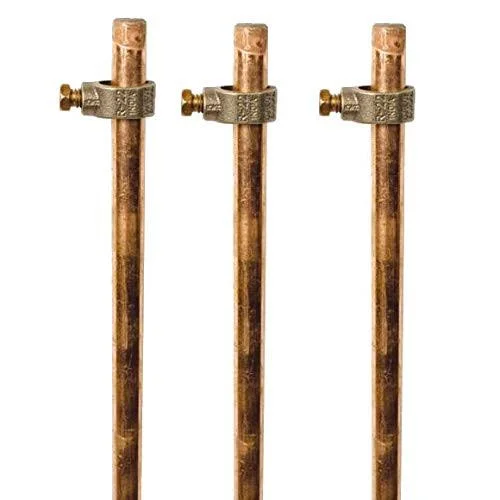
Ground a new residential service with two 8-foot ground rods spaced at least 6 feet apart, connected with a 6 AWG copper grounding electrode conductor and listed direct-burial clamps. Also connect to the concrete-encased electrode in the footing if one exists, and bond the metal water pipe. These electrodes connect at the service equipment.
What does the grounding electrode system include?
- Ground rods: at least 8 ft long; two rods at least 6 ft apart unless one rod tests at 25 ohms or less.
- Concrete-encased electrode (Ufer): 20 ft of rebar or bare copper in the footing. Required to be used when present, so plan it before the pour.
- Metal water pipe: must be bonded if 10 ft or more is in contact with earth, and supplemented by another electrode.
- Grounding electrode conductor: 6 AWG copper to rods; larger to a water pipe on bigger services.
How do you install a ground rod?
- Drive the rod vertically until the top is flush with or below grade. If you hit rock, drive it at an angle up to 45 degrees or bury it horizontally at least 30 inches deep (NEC 250.53(A)(4)).
- Use a clamp listed for direct burial, such as a bronze acorn clamp, one conductor per clamp unless listed for more.
- Run the conductor continuously to the service equipment, protected where exposed to damage.
- Drive the second rod at least 6 feet away and connect it the same way.
Call 811 before driving rods. An 8-foot rod can reach buried gas, water and electric lines.
Ground rods and clamps are on our service parts list.
Frequently asked questions
How many ground rods do I need for a new service?
Usually two. NEC 250.53(A)(2) requires a single rod to be supplemented by a second electrode unless the single rod measures 25 ohms or less to earth. Since most installers can't test that, two rods spaced at least 6 feet apart is the standard practice.
What size ground rod is required?
A ground rod must be at least 8 feet long and driven so at least 8 feet is in contact with soil. Copper-bonded steel rods are typically 5/8 inch in diameter; NEC 250.52(A)(5) allows 1/2-inch rods only when listed.
What size wire goes to the ground rods?
The grounding electrode conductor to a rod does not need to be larger than 6 AWG copper (or 4 AWG aluminum), per NEC 250.66(A), regardless of service size.
Sources: NFPA 70 (NEC) 250.50, 250.52, 250.53, 250.66.